UX DESIGN · WEB · CONVERSION · 2025
From Anonymous to Invested
Built Picta's account creation MVP: user choice over forced capture, with the retention foundation the business needed.

THE CHALLENGE
The Challenge
The brief was clear. The problem wasn't.
Picta had no account system: no purchase history, no saved drafts, no foundation for CRM or personalization. The brief was to build one that didn't cost activation. Pre-launch research validated the value proposition — users wanted history, reorder, autofill. What the research didn't surface was the question that would break V1: on a white-label partner platform, "create an account" means something ambiguous. Account with whom?
THE QUESTION WE DIDN'T ASK
"Whose account is this?" — we never asked it in research. V1 answered it the hard way.
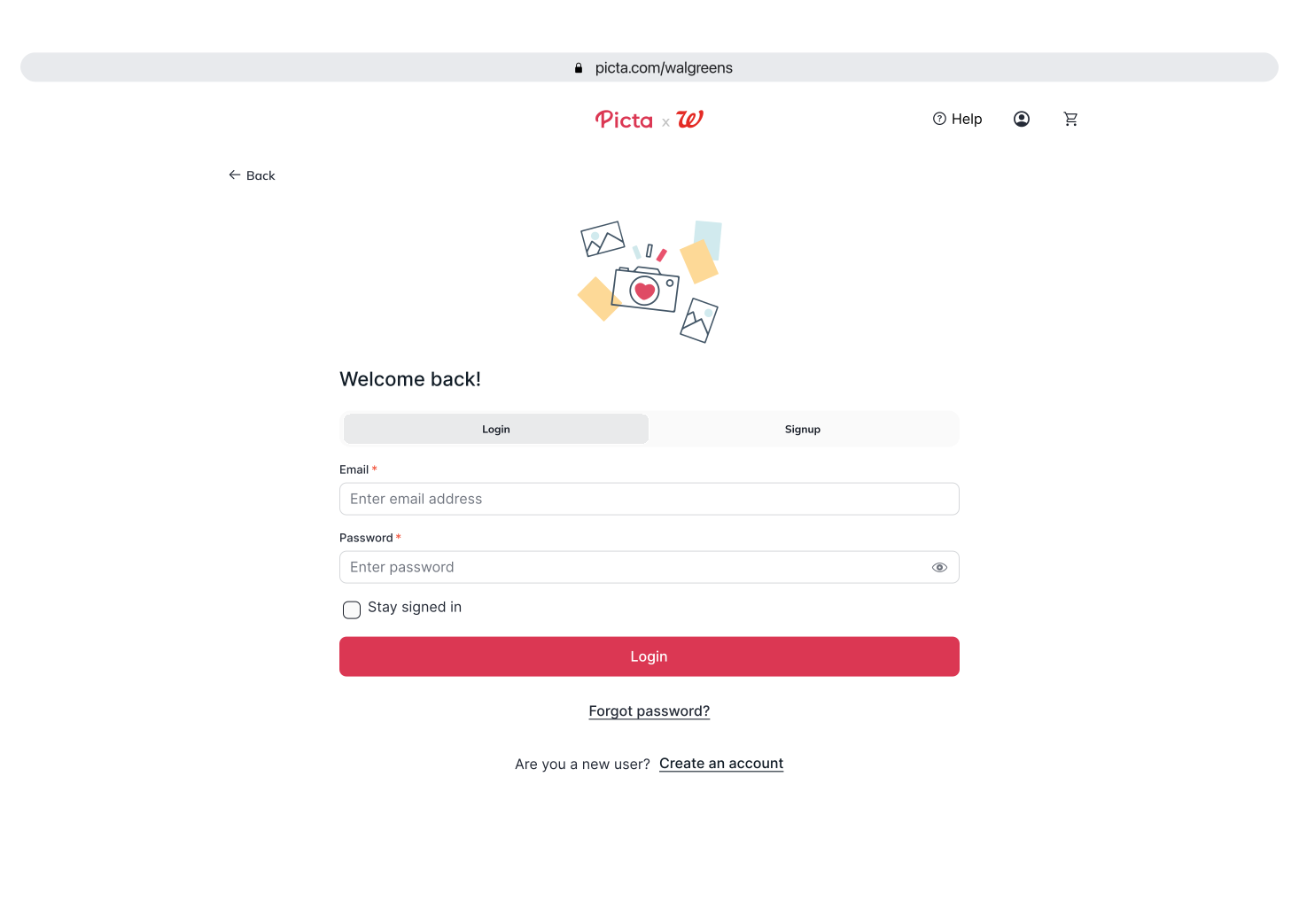
Pre-launch research confirmed users wanted an account: history, reorder, autofill, purchase confirmation. It didn't test whether users understood whose system they were entering. On a white-label partner platform, that's the question that changes everything. Users arrived at Walgreens and saw "create a Picta account" — a name that didn't match where they were. The identity model was wrong, and no UX fix could solve a brand problem. That missing question cost four months and produced the diagnosis that made V2 work.
THE APPROACH
The Approach
The failure wasn't the login. It was the mental model.
V1 launched as a 4-variant AB on Walgreens and CVS and ran 13 days before rollback: 71% login error rate, activation dropping on both partners. Session replays identified the real problem — brand confusion, not form UX. Users thought "Picta account" meant their partner app account. PostHog analysis, post-mortem interviews, and SQL-driven research campaigns confirmed it across methods. A copy intervention naming the partner directly in error messages (no industry precedent in the category) moved errors from 71% to 65% immediately. The structural fix was upstream: V2 moved to PictaUS under the new Picta brand identity — the same system rebuilt in The System Behind the System — where Picta is the primary brand and the identity confusion doesn't exist. No activation loss at 100% rollout.
The Process
Discover
Validated the account value proposition through pre-launch user interviews: history, reorder, autofill, purchase confirmation. Users clearly wanted the feature. The research script confirmed the "why" without testing the "whose" — a gap that only became visible when V1 launched.
Define
V1 launched as a 4-variant AB (opt-in, default-on, popup, control) across Walgreens and CVS. 71% login error rate in 48 hours. Funnel analysis, PostHog session replays, and post-mortem user interviews all pointed to the same root cause: brand confusion, not form UX. Users thought they were creating a partner account. The real problem lived upstream of design.
Design
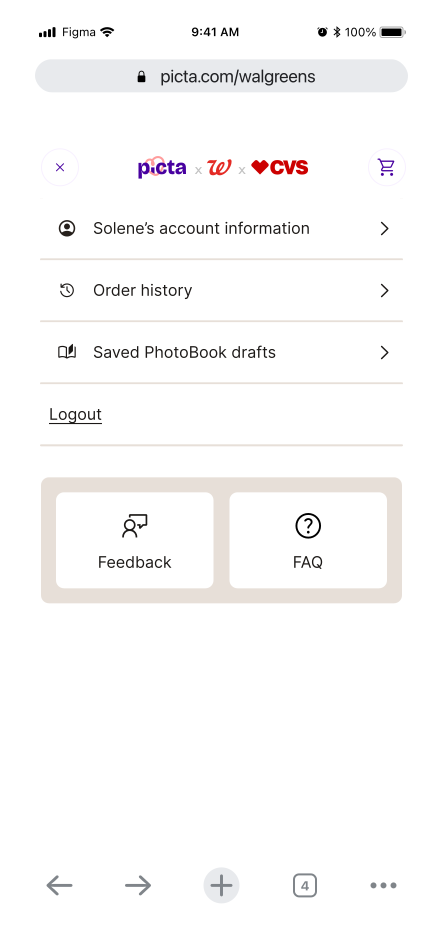
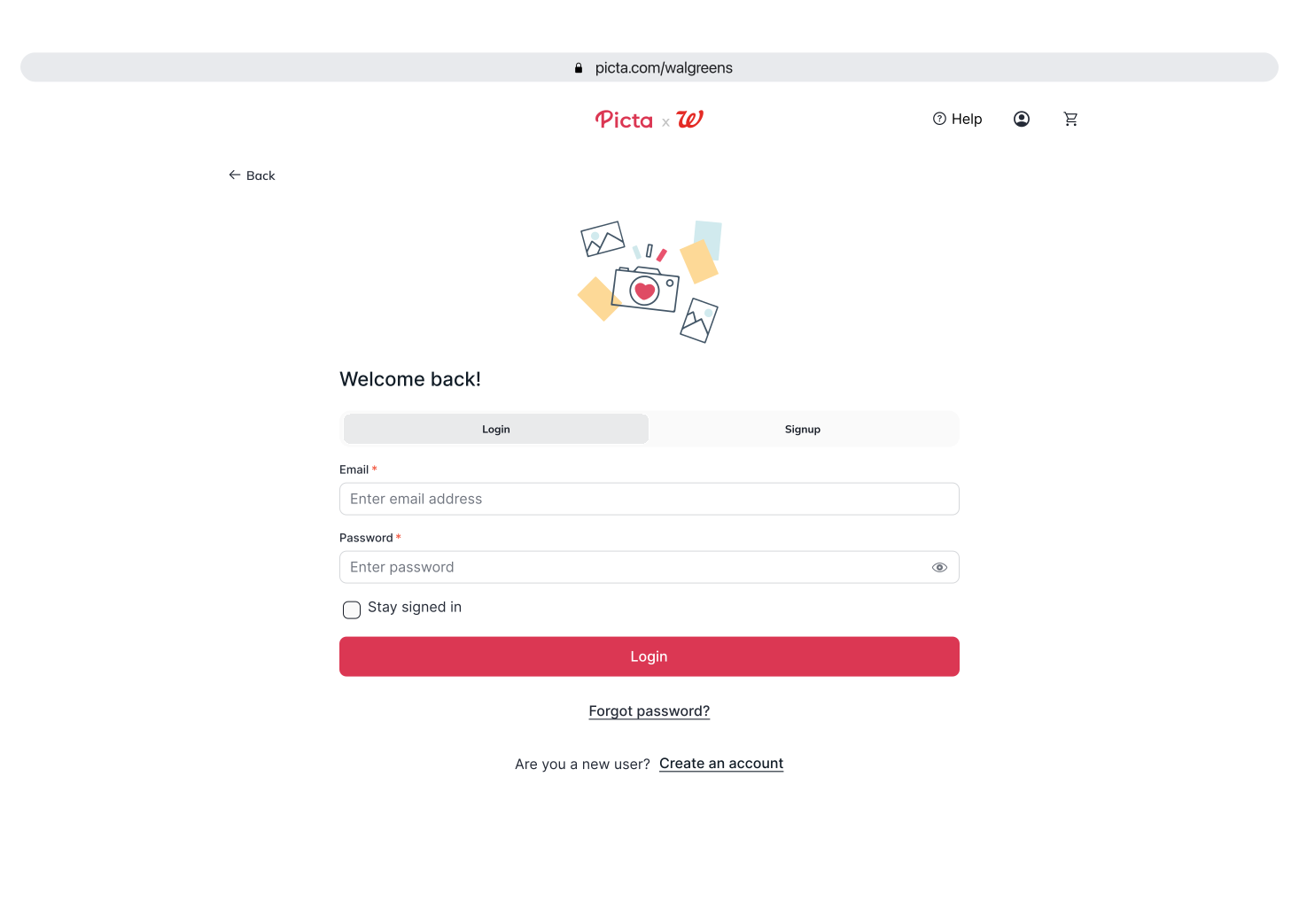
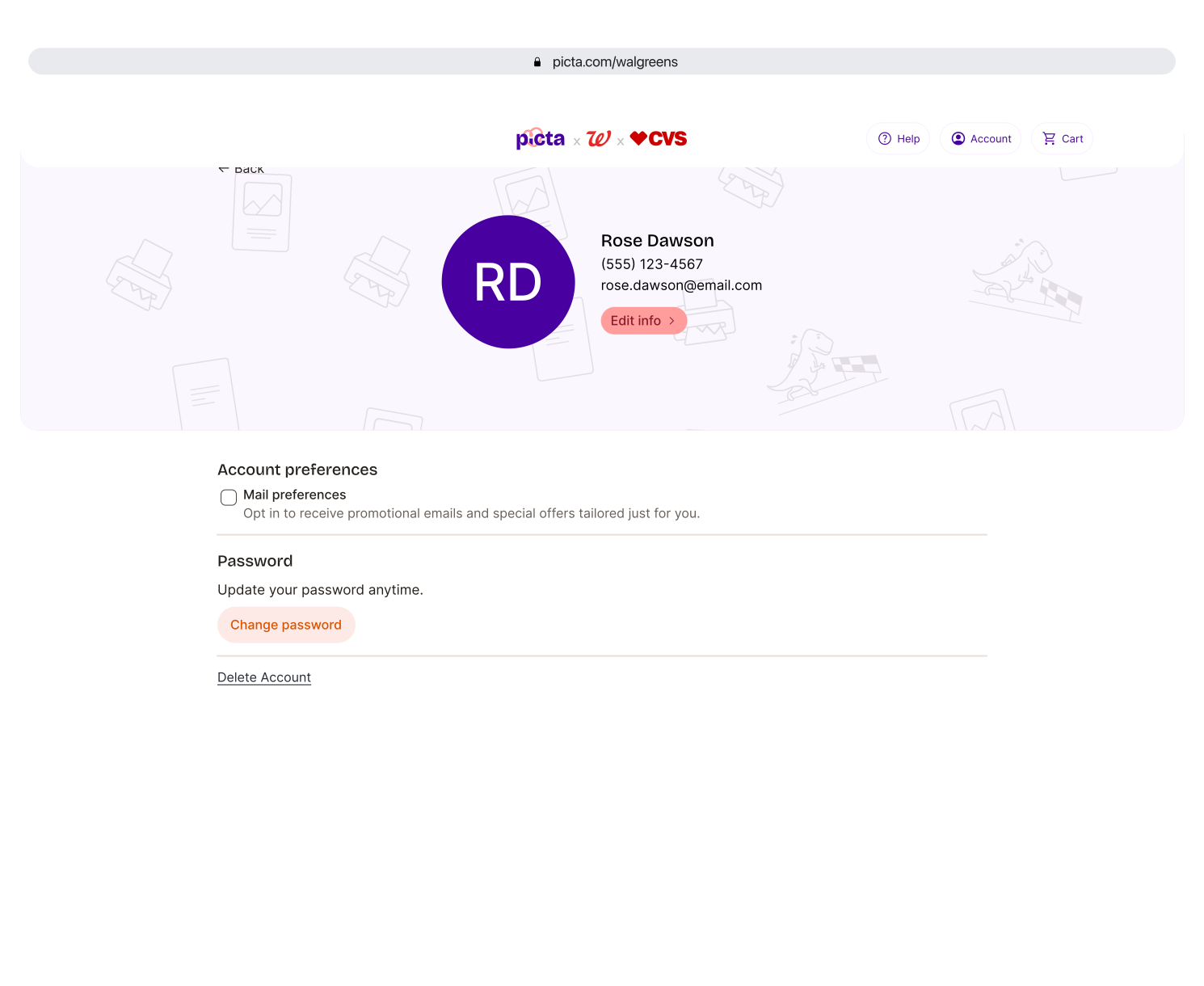
Designed the full creation flow (signup, login, error states, confirmation, and authenticated entry state) as a single Figma component-variant for clean AB testing. The copy intervention naming the partner brand directly in error messages had zero precedent across five competitor apps. It reduced errors from 71% to 65% with no other change. The component system paid off: V2 reused V1 flows 1:1.
Deliver
V2 launched on PictaUS alongside the new Picta brand identity, making the account system one of the first surfaces the redesigned system shipped on. 100% rollout, no activation loss, no LTV loss. Post-launch user testing confirmed: 4 of 5 users distinguished Picta from the partner without relying on the URL, using design and copy cues.
The Outcome
The hardest lesson from V1 wasn't the rollback. It was learning that testing whether users want something isn't the same as testing whether they understand whose system they're in. The research validated the value proposition and missed the identity model entirely. That's a test I'd add to every script for any white-label or multi-brand product. The copy intervention — naming the partner brand in an error message — was a pattern I hadn't seen in the category, and it moved the numbers without any other change. V2 worked because V1 built the right diagnosis. A failed launch that generates the correct insight is worth more than a clean launch that hides the wrong one.